Seashells Sunset Tumbler Wrap 38
A Designer’s First Look: Warm, Coastal, and Purpose-Built
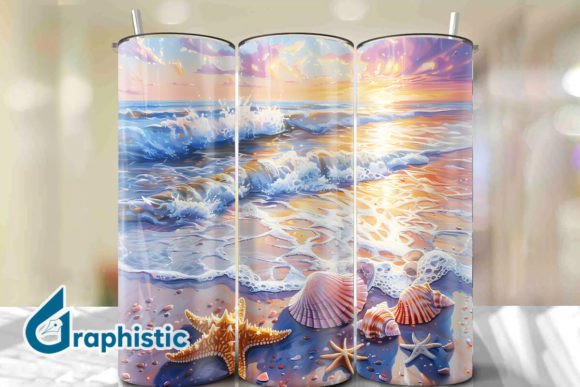
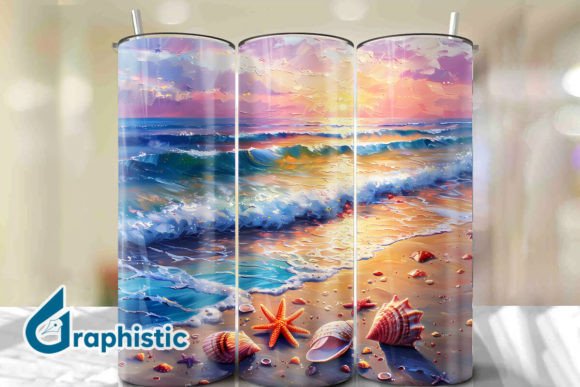
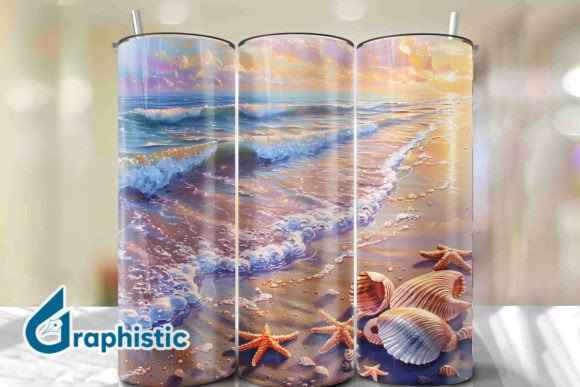
When I opened Seashells Sunset Tumbler Wrap 38, my first thought wasn’t “pretty”—it was “usable.” As someone who’s stitched hundreds of designs for client orders, Etsy listings, and boutique merchandise, I scan for rhythm, balance, and stitch-readiness before aesthetics. This one lands softly: a gentle arc of stylized seashells—scallops, conchs, and tiny spirals—curving along a sun-dipped horizon line. It’s not fussy. No hyper-detailed barnacles or micro-textured sand. Instead, it breathes like coastal air: open, warm, and quietly intentional. The layout clearly belongs to the Backgrounds category—not as filler, but as a framing device. Think of it wrapping around the curve of a tumbler, yes, but also hugging the lower corner of a linen tea towel, tracing the hem of a baby onesie, or anchoring a custom embroidered tote bag.
Where It Shines in Real Embroidery Projects
I tested Seashells Sunset Tumbler Wrap 38 on three real-world items: a heavyweight cotton canvas tote, a midweight French terry sweatshirt, and a lightweight organic cotton baby blanket. On the tote? Perfect. The gentle curve aligned cleanly with the side seam, and the satin-stitch shell outlines held crisp definition without overwhelming the fabric. On the sweatshirt? It read beautifully at 4.5" wide—no puckering, no thread nesting—especially when paired with a medium-weight cutaway stabilizer. And on the baby blanket? It added just enough coastal charm without visual clutter—ideal for nursery decor or personalized holiday gifts where softness and subtlety matter more than flash.
It’s equally effective for embroidered patch applications (heat-seal or sew-on), as the clean outer edge allows for precise trimming. For custom apparel like crewnecks or aprons, it works best as a lower-back accent or sleeve wrap—not center-chest, where dense fill areas might compete with logos or text. As a digital embroidery file, its strength lies in versatility: it scales well between 3.5" and 5.5", holds detail in both light and dark thread palettes, and reads clearly even in black-and-white mockups—critical when prepping printable mockups for your Etsy shop or small shop product listings.
Where to Proceed with Care
This isn’t a design that forgives every choice. On stretchy fabric like jersey knits, I recommend basting + tear-away stabilizer beneath a light iron-on topping—otherwise, the subtle curves can distort during stitching. On thin fabric (think chambray shirts or lightweight scarves), reduce stitch density if your machine allows, or switch select fill areas to a lighter fill stitch pattern. Avoid using it full-size on curved surfaces like caps unless you’re confident in your cap frame setup—the arc is designed for cylindrical stability, not steep dome curvature.
Also: those delicate shell outlines rely on consistent satin stitch width. If your thread tension is off or your needle is dull, they’ll fray or skip. And while the design avoids tiny lettering or micro-details, the smallest scallop tips (yes, there are three of them) do require a sharp 75/11 needle and smooth 40-weight thread. Don’t rush it on textured fabrics like bouclé or heavy terry—test first. And if you’re planning frequent washing (baby items, kitchen towels), reinforce the outer edge with a narrow running stitch border or use a wash-safe stabilizer blend.
What It Adds—Beyond the Stitch
Seashells Sunset Tumbler Wrap 38 elevates perceived value without demanding premium pricing. Customers recognize hand-finished warmth—even in machine-stitched work—and this design delivers that instantly. On a plain sweatshirt? It transforms utilitarian into boutique-worthy. On a personalized gift? It says “I chose something thoughtful,” not “I slapped on a trend.” That builds customer trust and supports brand consistency for craft businesses leaning into coastal, mindful, or slow-living aesthetics. It also performs well in digital contexts: as design assets, it layers cleanly over photos in Canva or Adobe Express, and its balanced negative space makes it ideal for commercial embroidery branding—say, on a shop’s packaging tape or receipt stamp.
Practical Notes from the Hoop
Before you load Seashells Sunset Tumbler Wrap 38 into your machine:
- Always test on scrap fabric—same type, same stabilizer, same thread colors you’ll use for the final piece.
- Check thread color contrast carefully: warm golds and coral tones pop on navy or charcoal, but fade on rust or olive. A quick grayscale mockup reveals legibility gaps.
- Confirm your hoop size accommodates the full curve—some 5x7 hoops pinch the ends if centered poorly.
- Inspect the stitch density in the horizon line; if it feels too dense for your fabric, adjust underlay or reduce fill percentage by 5–10%.
- Use proper stabilizer: cutaway for knits and stretchables, tear-away for stable wovens, and fusible + tear-away for lightweight linens.
- Verify licensing terms before selling finished items—this is a digital embroidery file, not a physical product, and commercial use rights vary by seller.
And one last note: don’t overlook how well it pairs with complementary applique design elements. A single stitched starfish or palm frond placed just off-center turns this background into a signature motif—perfect for seasonal holiday embroidery or limited-run small shop product drops.
Final Thought: A Quiet Workhorse, Not a Flashy Trend
Seashells Sunset Tumbler Wrap 38 won’t shout—but it will sell. It fits naturally into craft business workflows because it’s predictable, adaptable, and emotionally resonant without being cliché. Whether you’re an Etsy seller building a coastal-themed shop, a handmade product maker refreshing summer inventory, or a creative entrepreneur sourcing reliable Graphics for client embroidery projects, this is the kind of file you save in your “go-to” folder—not for its novelty, but for its quiet reliability. It’s background that behaves like foreground. And in embroidery, that’s rare.