Tropical Summer Cocktail Tumbler Wrap
First Impressions: A Splash of Handmade Joy—Not Just Another Clipart Loop
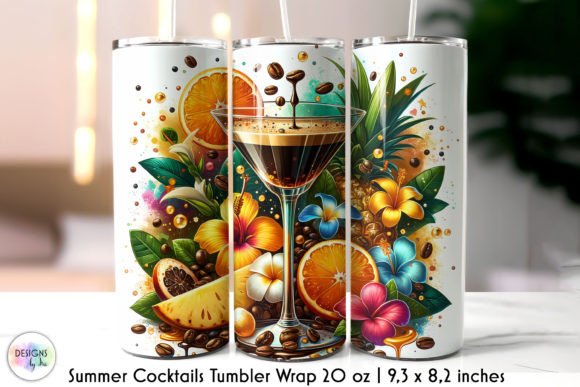
When I opened the Tropical Summer Cocktail Tumbler Wrap, I didn’t see a generic tumbler graphic—I saw potential for real handmade energy. The watercolour style isn’t overly soft or blurry; it’s confident, with clear silhouettes of pineapple wedges, hibiscus blooms, and citrus slices arranged in a relaxed, asymmetrical wrap layout. At 9.3 × 8 inches, it’s sized for a standard 20 oz straight tumbler—but as an embroidery designer, my mind immediately jumped to how those organic shapes would translate into satin stitch petals, layered fill-stitch fruit, and subtle running-stitch stems on fabric.
Where This Design Actually Shines (Beyond the Tumbler)
I tested the Tropical Summer Cocktail Tumbler Wrap as a custom embroidered tote bag design for a local café pop-up—and it landed perfectly. The composition holds up at 8–10 inches wide, with enough breathing room between elements to avoid thread crowding. On medium-weight canvas, the cocktail motifs read clearly without needing heavy underlay or excessive density. It works especially well for:
- Custom apparel: Sweatshirt chest placements (scaled down to ~6.5"), where the watercolour looseness reads as intentional artistry—not pixelation.
- Embroidered patches: Clean outer edges mean sharp cut lines and easy peel-and-stick backing prep.
- Baby embroidery: Soft fruit shapes and floral accents feel playful but not cutesy—ideal for bibs or onesie back panels.
- Holiday & gift embroidery: Think summer baby showers, bridal brunches, or teacher appreciation—items where “handmade” needs to feel warm, seasonal, and thoughtfully composed.
- Etsy seller assets: Use it as a printable mockup base or layer it into digital product previews—it’s got strong visual hierarchy for thumbnails and listings.
Real Embroidery Reality Checks
This isn’t a “drop-in-and-stitch” file for every surface. Here’s where I slowed down—and why you should too:
- Small hoop sizes: Don’t force it into a 4×4 hoop without scaling. Key details—like the tiny mint leaf or cocktail umbrella rib—lose definition below 5.5" width. Test stitch density first: dense fill areas (e.g., the pineapple core) can pucker thin cotton unless stabilized properly.
- Textured or stretchy fabric: On slubbed linen or lightweight jersey, those watercolour gradients won’t translate literally—but they *do* work beautifully with open satin stitch + strategic fill stitch breaks. Let the texture show through; don’t fight it.
- Dark fabric backgrounds: The PNG has no built-in white underlay. For navy totes or black caps, add a light-colour base layer manually—or embrace contrast with bright thread (think coral on charcoal). Always test thread color contrast on your actual fabric swatch.
- Curved surfaces: Caps and curved pillow covers need gentle digitizing adjustments. The original wrap layout assumes flat application—so if stitching on a baseball cap front, isolate one cocktail cluster instead of stretching the full wrap.
What It Adds to Your Finished Product—And What It Doesn’t
The Tropical Summer Cocktail Tumbler Wrap elevates perceived value without demanding premium pricing. Customers notice the cohesion—the way the lime slice echoes the hibiscus curve, how the tropical flowers balance the drink’s verticality. That kind of visual rhythm builds trust: it says “this was chosen, not grabbed.”
It strengthens brand consistency for small shops leaning into summer collections—think matching tea towels, aprons, and embroidered sweatshirts sold as a set. And for personalized gifts? It avoids cliché. No flamingos or palm trees here—just fresh, stylized fruit and florals that feel current and craft-forward.
But be honest: it’s not ideal for ultra-minimalist branding or monochrome palettes. Its strength is joyful specificity—not versatility across seasons. Save it for June through September launches, not year-round core collections.
Practical Designer Notes Before You Stitch
Before committing to a client order or bulk production, do these five things:
- Test on scrap fabric—especially if using textured weaves or blends. Note how stabilizer choice (cutaway vs. tear-away) affects edge crispness.
- Review stitch density in your embroidery software. If fill areas look overly dense, reduce by 5–10%—watercolour shouldn’t feel heavy.
- Confirm hoop size compatibility. At full size, this design needs at least a 6×10 hoop. Smaller hoops require smart cropping—not just scaling.
- Inspect small details at 200% zoom. Check whether fine stems or seed dots hold integrity when stitched. If not, simplify them manually before digitizing.
- Run black-and-white and light/dark background mockups. Does the composition still read clearly without colour cues? (Spoiler: yes—but only if thread contrast is intentional.)
A Final Thought for Craft Business Owners
As someone who’s reviewed hundreds of Graphics and Tumbler Wraps for commercial embroidery use, I’ll say this plainly: the Tropical Summer Cocktail Tumbler Wrap stands out because it’s designed *with fabric in mind*, not just screen display. It invites interpretation—not rigid replication. Use it as a starting point for your own embroidery voice: adjust thread palettes, mix in applique elements, pair it with handwritten text, or let it anchor a full summer collection.
Just remember: always verify licensing terms before selling finished items or bundling the file into digital products. And if you’re listing it on Etsy as part of a bundle? Pair it with a simple care instruction card (“Spot clean recommended for longest wear”)—that tiny detail makes your handmade product feel professionally considered, not hastily assembled.